The seafood-focused pop-up became so popular in the pandemic that it’s now a permanent restaurant
2021 Eater New Guard members Ed Szymanski and Patricia Howard’s pop-up, Dame, was supposed to sell fish and chips to New Yorkers for a few weeks in the summer of 2020 during the pandemic. Just about a year later, they’re still dunking hunks of hake into the deep fryer.
“We thought we’d be doing three or four orders every hour,” says Szymanski. “We didn’t think we’d be selling 100 pounds of fish every week.” The response to the couple’s battered hake, fried to crispy perfection, was explosive, and our video followed the duo as they tested out recipes six weeks before opening the doors to their permanent space in NYC’s West Village.
“The pandemic has left a lot of chefs untethered and that’s allowed pop-ups and people like us to really blossom and start cooking their own food,” Szymanski says, pullying a whole hake out of his fresh daily delivery. He prefers this breed for his fish and chips, as it’s more local to the area than the commonly used cod, but it’s a similar flaky white fish that holds up well to frying.
He debones the fish, adds some lemon zest, salt and sugar, and then dips it straight into batter made with flour, sweet potato starch, rice flour, baking powder, cold beer, and vodka. Szymanski stresses the importance of making the batter to order each time, as he wants the fish to steam inside the fresh, cold batter as it fries in the hot oil. He finishes the dish with a few mists of vinegar from a spray bottle, which adds that signature tangy flavor without causing the crispy fish to get soggy. Szymanski and his team go through about 150 pounds of hake on the weekends alone, and churns out about 100 orders on his busiest days.
“People in England don’t eat fish and chips that much, like it’s not a common part of your diet in the U.K.,” says Szymanski, a U.K. native. “So I was like, ‘there’s no way it’s going to be popular in America,’ and their response was just overwhelming straight off the bat.”
Aside from feeding NYC crispy seafood, Szymanski and Howard have another goal they hope to achieve with the opening of their restaurant: narrowing the pay gap between those who work in the front of the house, and those who work in the back. “It’s part of who we want to be as restaurateurs,” Szymanski says. “We’re going to use our privilege and our position as restaurant owners to help people more than just outside the four walls of the restaurant. Our mission as restaurateurs is to give back to the community in more ways than just cooking them dinner.”
While some carts are shutting down completely this weekend ahead of the triple-digit temperatures, others are trying out brunch specials, grill kits, and picnic fare as a way to bring in revenue before things get too hot
Your annual reminder that just because a company slaps a rainbow on a product during Pride doesn’t mean it supports the community
During Pride month one year when I was in high school, I got my underage hands on a limited-edition vodka bottle — one of the ones with a rainbow label, its contents mostly gone. Even when the bottle itself was empty, I tucked it away in the back of my closet, and kept it there for years: at the time, my family didn’t know I was gay. But the bottle was a concrete, tangible reminder that there was broad — or broad enough — acceptance of gay culture that when I did eventually come out, I could have the kind of life I dreamed about. That little symbol mattered to me.
Now that I’ve been out for years, and have found the very acceptance and love that I envisioned as a little gayby, mere acknowledgement or limited-time-only support doesn’t feel like enough — for me, or for younger queer people who are still finding their place in the world. Every year in June, my inbox fills up with promotions for things like “Love Wins Gender Freedom LGBT Themed” rainbow cutting boards and “rainbow cocktail” recipes made with checks notes, uh, peanut butter whiskey. These sorts of products, with their vaguely supportive statements and bright rainbow designs signal acceptance, if not active support for queer people.
But when I look further into these products, often the company’s founders and upper management are not part of the queer community, and outside of a week- or month-long campaign, they are doing little to concretely uplift queer people, either by distributing a portion of profits to a queer-focused organization, or by actively working to better the lives of their queer workers year-round. Acceptance is great, yes, but these campaigns are largely short-lived marketing schemes. If Pride month is about buying gay stuff (which, for a lot of people, it is), why not buy it from actual queer people? And if it’s about finding allyship in non-queer spaces, then businesses should be coming through for queer people every day of the year. That is allyship.
This halfhearted support is how we end up with bags of grey Skittles being released into the wild because “only one rainbow matters during Pride.” This cloying need to voice support for a community that has spending power is fuel for more insidious marketing campaigns, with companies like the massive beer producer Anheuser-Busch voicing their dedication to “inclusion and diversity,” while, as Rolling Stone points out, they simultaneously support anti-LGBTQ legislators.
Though most of these product drops and statements of support are as vague and vanilla as it gets, Pride’s roots are radical, and have nothing to do with marketing campaigns and limited edition sneakers. This month is, in part, a recognition of the Stonewall riots in 1969, where a group composed largely of drag queens, trans patrons, and gay men of color fought back against an all-too-common police raid of the Stonewall Inn in New York’s West Village, and propelled the movement for queer liberation forward. Without this action and leadership, fighting against police brutality and the criminalization of queerness, there would be no “Pride” as we know it. This month is also spent in acknowledgement of the many lives lost to the HIV/AIDS epidemic, which was largely ignored by the government as an entire generation of gay people died. But as (predominantly white, gay) queer culture has become marketable — and as huge corporations have gotten in on the action — the roots of Pride have been obscured.
This sort of rainbow branding to attract queer dollars, without making substantial or long-lasting commitment to queer causes, is known as “rainbow washing.” Random companies put a rainbow overlay on their Twitter icons, and every other clothing brand seems to have a rainbow capsule collection. By July 1, it’s just a technicolor dream. Unless, of course, you happen to be a part of the 68 percent of LGBTQ youth experiencing general anxiety disorder, or the more than 50 percent of trans and non-binary youth who’ve reported seriously considering suicide, per a study by the Trevor Project. For them, like for younger me, the visibility of big, bright rainbow Pride campaigns may provide some comfort, but they’re not enough — not even close.
If every corporation that commodified queerness for Pride lobbied against these anti-trans bills in state legislatures none would pass.
Many companies adopt the imagery and symbols of mainstream Pride celebrations (namely, the rainbow flag), while ignoring the month’s radical origins, or actively supporting anti-queer initiatives and politicians as they profit off the community. For too many companies, both in the food industry and elsewhere, Pride month becomes an opportunity to pander to the upwardly mobile members of the queer community, without advocating for those who are in urgent need of resources and support.
These corporate efforts make queerness feel mainstream, as though all is good and well and we’re safe to live our lives openly. For white gay men like myself, living in major cities, that may be close to true. But according to the Human Rights Campaign, 2021 was the “worst year in recent history for LGBTQ state legislative attacks.” Trans people — a majority of whom are Black women — are still being murdered with crushing frequency. The movement for queer liberation is an ongoing fight, and it shouldn’t simply be celebrated by companies as if it the work is done. Queer people don’t need more stuff, we need the corporations that court us to fight anti-trans legislation and fund queer organizations in perpetuity.
It’s the dissonance between outward allyship and a lack of internal change and ongoing support and action which is most striking, and makes me raise my eyebrow at so many of these Pride campaigns. Stating that love is love (which, well, yeah) and that queer people exist (we do!) is not an adequate form of allyship when so many queer people are still fighting for their lives. Corporations that do little to support queer people outside of this one month have found a way to profit off of and commodify queerness, without truly engaging with the issues that are detrimental to the wellbeing of so many in our communities.
I urge those tempted by June Pride collections to dig deeper into these campaigns, and take note when companies are throwing a rainbow flag on their products without engaging with queer issues. What’s even better than supporting massive straight-owned corporations selling rainbow products is to support companies run by queer people. And if a straight-owned and operated business does choose to be vocal about its support for queer people during June (and profit off of that support), pressure them to continue through the year. This year, Effen vodka released a rainbow bottle that will be available year-round, with a portion of profits from each sale benefiting a queer organization. The fight for queer liberation is ongoing, and a bottle of vodka with a rainbow sticker and a mission statement won’t change that. But we can push brands in the right direction and demand that our money — and our lives — are treated as more valuable than a rainbow with an expiration date.
Transgender drivers say their safety concerns have gone unchecked. Now, Uber claims it’s listening.
On June 1, with Pride Month in full swing, Uber rolled out Right to Pride, an initiative designed to “empower a better experience for our LGBTQIA+ community, and particularly the transgender community,” according to the company’s website. While Uber had already created community guidelines that expressly forbid discrimination, as well as an in-app option to report it, the new initiative’s bulleted list of upcoming measures included changing the Uber app to allow “trans and nonbinary drivers and delivery people to display only their self-identified chosen first name,” as well as the establishment of a fund to help its drivers cover the costs of updating names and gender on legal IDs and records.
Delivery drivers have provided an essential service over the past year while boosting sales for third-party delivery apps such as Uber Eats, Grubhub, and DoorDash. Companies are seeing results: In May, Uber Eats announced its delivery revenue was $1.7 billion, up 270 percent from the previous year. But even as the pandemic has delivered huge financial gains for delivery companies, it has also seen a spike in violence toward delivery workers. Gig economy drivers have been particularly susceptible to carjackings and car thefts, which have risen in several cities during the pandemic. In March, an Uber Eats delivery driver named Mohammad Anwar was killed in a crash after being carjacked in Washington, D.C.
For transgender delivery drivers, safety is an especially big concern. According to the Human Rights Campaign, an LGBTQ advocacy group, at least 25 transgender or gender-nonconforming people have been killed in 2021. Transgender delivery drivers, who often interact with customers when dropping off food, risk violence through exposure to transphobic people throughout the work day.
For three transgender Uber Eats drivers who spoke with Eater, Uber’s recent announcement marks a long-overdue change in policy. Two of them say that company practices such as displaying legal deadnames alongside a driver’s chosen name and rejecting up-to-date photos effectively outed them as transgender to customers, forcing them to choose between their safety and their income. What’s more, the difficulties they experienced with the app’s highly automated support systems led them to seek employment from other delivery services with more inclusive policies.
Milo Whitehead started driving for Postmates in Portland, Oregon, in September 2020. Uber Eats bought Postmates for $2.65 billion last November; after the acquisition, Whitehead had to re-onboard and quickly ran into issues: his legal deadname (a name given at birth), which is currently still listed on his license and insurance, didn’t match the chosen name already connected to his personal Uber account.
When Whitehead contacted in-app driver support, he was told that he would be able to add a nickname, but it would be displayed in parentheses next to his deadname, both of which would be visible to customers. (Eater has viewed screenshots of the exchange.)
“I explained that didn’t make me feel safe because having a masculine name as a ‘nickname’ and a feminine name as my legal name could out me as being trans to people,” Whitehead says. “At no point did I feel like they were listening to what I had to say about why that could be dangerous. If a problem doesn’t fit specifically into a neat FAQ or support section, then it’s not going to get answered.”
Whitehead was one of two transgender drivers who told Eater they received conflicting information from Uber Eats driver support on whether or not customers would be able to view their deadnames after updating their profiles.
In January 2020, Andrea Debenedetto started driving for Uber Eats and Uber in upstate New York. A year later, after undergoing hormone therapy that altered her appearance, she was forced off the app when she attempted to update her driver photo. Debenedetto had tried on three separate occasions to upload a new image, altering her makeup in an attempt to get the photograph accepted, but was rejected each time. After the third try, her account was flagged and frozen for fraud, which prompted her to call driver support. A support staffer told her that they would make a note on her file to accept the new image, but her next three attempts were also unsuccessful.
“After the third call and third time of it not working, I literally gave up and started driving for Lyft,” Debendetto says. “My life is already a big headache, one after another, most of the time.”
Lyft, along with DoorDash and Grubhub, told Eater that they allow workers to change their display names after registering with their legal name, without the legal name appearing in the last name field. Both Grubhub and Lyft said they allow drivers to change their names in the app, while DoorDash said they must contact support to do so.
Uber Eats often markets itself as promoting LGBTQ inclusion; it’s made splashy commercials with nonbinary Queer Eye star Jonathan Van Ness and tweeted macaron-and-cotton candy trans flags for Pride Month. Uber employees receive guidelines for gender transition that include creating a “transition plan” with human resources and state that “every effort should be made to use the new name and gender marker” on internal communication such as company identification cards, “regardless of legal changes to these identity markers.”
But while Uber supplies this support for its trans employees, the company has spent plenty of money to make sure its drivers are not classified as employees. Delivery and rideshare apps spent $224 million in support of California’s controversial Prop 22 last November, which categorized drivers as independent contractors. Its passage meant that, unlike most other business sectors in the state, these companies do not have to provide their drivers with common employee protections like health care benefits, unemployment insurance, or human resources.
Rebecca, an Uber Eats driver in North Carolina who asked that only her first name be used due to privacy concerns, had her account deactivated in April 2021 after two encounters with transphobic customers she believes falsely reported her for allowing someone else to use her account to complete deliveries. But she had already validated her identity twice during her shift: Uber Eats requires drivers to submit a photo of themselves wearing a mask at the start of each shift, and she also submitted a maskless photo during a “random” identity check.
Rebecca’s chosen name is also her legal name, appearing on both her Uber Eats profile and driver’s license. The issue arose, she claims, because the customer was upset that his order was second in a queue of deliveries, and greeted her with transphobic slurs when she made the delivery. While Uber Eats doesn’t tell drivers which orders lead to a complaint being filed, the experience left little doubt in her mind. “It’s just aggravating to know all it takes is one customer lying because they got upset that they didn’t get their food delivered first in a stack, so they put your whole job and lifeline at jeopardy,” Rebecca says.
With no formal appeals process available, she turned to Twitter and a reporter from the local ABC affiliate, for help. Soon, Rebecca received a call from an Uber representative who identified herself as part of a “special support task force” and reinstated her account over the phone, she says. Both Debenedetto and Whitehead say they have never been approached by anyone from the task force, and have lost income while they were waiting for the company to resolve their problems.
“We’re very sorry to hear that the drivers you spoke with had difficulties updating their name and photo in the Uber app. That shouldn’t have happened,” an Uber spokesperson emailed in response to Eater’s multiple requests for comment, which had been sent over the course of four weeks. The spokesperson went on to reference Uber’s June 1 announcement that it would allow trans and nonbinary drivers to display “only their self-identified chosen first name”; as of last week, drivers can now submit requests for photo and name changes through a link on the company’s website. Those requests “will be handled by a specialized Driver Inclusion team,” the spokesperson said. “With this new process in place, we hope to make it easier for trans and nonbinary drivers and delivery people to update their name and photo in the Uber app so that it reflects their true identity.”
Regardless of Uber’s stance on the display of deadnames, its Pride Month announcement comes too late for Whitehead. “Honestly I’m not planning to try this feature,” he says. In early May, after waiting several weeks for Uber Eats to resolve his issue, Whitehead applied to work for Grubhub and began driving for the company a few weeks later. He submitted a background check with his legal deadname, then called support to ask the company to use his preferred name, which was updated over the phone. “Grubhub has been way better to me in terms of pay and safety, and every time I see communication from Uber, like telling me that my account is active so I can start driving despite not resolving this issue, it’s so upsetting,” Whitehead says. “Long story short, it’s not worth the continued trauma.”
Debenedetto, whose Uber driver account has been suspended since mid-January, started driving for Lyft in March. On June 18, after a six-month court process, she received a new license with her updated gender marker and name, and uploaded it to Uber Eats. But once again, her account was flagged for fraudulent use. Debenedetto says she wasn’t aware of Uber Eats’ new specialized Driver Inclusion team, which wasn’t mentioned by the general support number she contacted for an appeal. At time of publication, her account is still suspended.
“I mostly assume the worst with Uber at this point, but I’m hoping this system is better,” she says. “Most of the other apps make it really easy to change your name and they have all your information, so I feel like it should be a lot easier, especially for trans people in this day and age.”
There’s no better pairing than this meaty, olive-y sandwich and a glass of wine
While I’m sure you have the art of sandwich-making down, the warm, and pressed panino is a guaranteed way to up your go-to sandwich. Eater Wine Club’s guest sommelier for June, Liz Martinez, was most recently at Detroit wine bar and shop the Royce, where she found her favorite wine snack — the panino. (Now you can find Martinez as the director of beverage and service at Daxton, a the brand new hotel in Birmingham, Michigan.)
The offering at the Royce is devised by its wine buyer Monica Tân. Tân’s general panino philosophy is quality over quantity: a few thin slices of soppressata and a firm cheese with good olive oil are really all you need between a baguette. Her recipe is also all about finding the ideal accompaniment to the wine in your glass. Here is Tân’s ideal meat and cheese combination, plus her go-to brands for the olive oil, olive tapenade, and truffle salt to finish it off.
The baguette
The star of any sandwich is the bread that wraps it all together. For this panino, the ideal vehicle for Tân is a French baguette. If you’re local to Michigan like Tân, she recommends the baguette from Cannelle in Ann Arbor. That said, your best bet is to support a local restaurant or bakery — which very well might be an Instagram-only operation. There are also options like Bread Basket NYC to have one from a beloved bakery shipped to your home.
The meat
For Tân, the only option for the meat in this panino is a soppressata. She’s also particularly fond of the dry Italian salami from Creminelli ($9.99), which you can order online or find at a grocery store near you. You’ll need 1.5 ounces soppressata, thinly sliced.
The cheese
Hear us out, the cheese for this Italian sandwich is Spanish; Iberico to be specific. Trust your local grocer or cheesemonger and get their recommendation for a good Iberico (you’ll need 1.5 ounces per sandwich). Taleggio would also do nicely here.
The accompaniments
The first thing you’ll want to layer when building your panino is a green olive tapenade. Tân likes hers from Sable & Rosenfeld ($12.42), a blend of green olives, carrots, cauliflower, red bell peppers, celery, and capers — all soaked in olive oil. Then, to finish it all you’ll need really, really good olive oil and salt. For the extra virgin olive oil, Tân recommends using Pons from Spain ($19.95). And for the salt, it’s truffle salt from Urbani di Italia ($23.99) or nothing at all.
Sonic and Dunkin’ are both introducing boba-esque drinks this summer
Since the ’90s, Americans have developed a taste for boba, aka bubble tea — a variety of drinks, often-but-not-always-tea-based, filled with black tapioca pearls that originated in Taiwan and are now enjoyed the world over. First, Taiwanese-Americans and other members of the Asian diaspora filled boba shops in Asian communities, turning an affinity for boba into a marker of identity, for better or worse. Then, its popularity spread, hitting basically every touchstone on the journey of a food trend — non-Asian people flocking to Asian-owned businesses to try it, and then acting like they “discovered” it, boba shops opening in every town, and even a pandemic-related supply shortage. And now, the final step: National chains are putting it on the menu while also trying to pretend it’s something new.
Last year, Del Taco introduced a drink with “popping pearls,” noting that to that point, “popping pearls ... had not appeared on the menu of any major quick-service restaurant” (in the United States, anyway). Today (June 23), Dunkin’ is introducing “Popping Bubbles” drinks to its menus, after testing them in Massachusetts last year. The strawberry-flavored bubbles can be added to any iced or frozen drink, and will be paired with the wide straw typically used in boba drinks to suck up the boba pearls. And late last month, Sonic introduced Green Apple flavored “Bursting Bubbles,” part of a summertime special that will run until August 1. They can be added to any cold drink as well, but are also featured in the chain’s Blue Burst Slush and Cherry Burst Slush. Both Dunkin’ and Sonic are owned by Inspire Brands, which also owns, among others, Baskin Robbins, Arby’s, and Buffalo Wild Wings.
The upcoming introduction by Dunkin’ and Sonic, both of which have built their brands on drinks, catapults the bubbles into the mainstream. It’s notable that, despite the very obvious provenance, neither chain (unlike Del Taco) is calling these drink additions “boba.” In a statement to Eater, Sonic said the bubbles are “purposefully uniquely different from traditional boba or tapioca pearls. They are orbs of sweet, flavored syrup encased in a thin candy exterior that yield and pop with light pressure, creating an exciting burst of flavor with every sip,” and they specify that they are served in drinks “beyond just teas.”
Similarly, Dunkin’ told Eater in a statement, “Dunkin’s Popping Bubbles were developed to offer our guests a delightful new option to add to any Dunkin’ iced or frozen beverages... With delicious strawberry flavor that literally bursts in your mouth, Dunkin’s Popping Bubbles are made from a simple syrup with color sourced from plants, while Boba is made from tapioca, which has a firmer consistency.”
These bubbles, of course, are not new. They are known everywhere else as “popping boba,” and are an incredibly popular topping option in frozen yogurt or boba tea shops, especially in Asia. They are an “offshoot of traditional boba,” writes Brand Eating, in which fruit juice or flavor is held together by a gel membrane that pops in the mouth. It’s a different texture than the tapioca pearls, which are gummy and chewy, but still often part of the boba menu. “Popping boba is generally easier for fast-food restaurants to add to the menu as traditional boba needs to be kept hot to keep [its] chewy texture,” writes Brand Eating, “whereas popping boba can just be placed in some ice water for holding without affecting the texture.”
As Dayna Evans recently wrote about the history of no-knead bread, “ownership of techniques and recipes is a fraught concept in both domestic and professionalsettings.” But not linking these drinks to boba tea culture when they are easily identifiable as such to much of the world serves to erase that cultural connection. At best it’s an act of branding, a way for Sonic and Dunkin’ to position themselves as having something new and unique on their menus. At worst it’s an act of appropriation that refuses to give credit to these drinks’ provenance.
But like many things you can lob the accusation of “appropriation” at, these restaurants aren’t sitting there scheming over boba, hoping the history books will be rewritten to say Sonic came up with it first. Fast-food chains are built to absorb and regurgitate trends, and just like Dunkin’ added avocado toast and matcha lattes and vegan sausage as soon as those trends seemed popular enough to be profitable, it’s adding a variation on bubble tea. Maybe one day these brands will figure out how to add tapioca boba to their drinks, and then the trend will only have one more place to go — everyone getting sick of it.
Not quite a pitcher, not exactly a decanter, pouring my morning coffee out of a juice carafe feels deliciously retro
Every summer, I brew coffee in the evening to chill in the fridge overnight. Once it sits in my stovetop percolator long enough to cool down, I pour it into a vintage orange juice carafe.
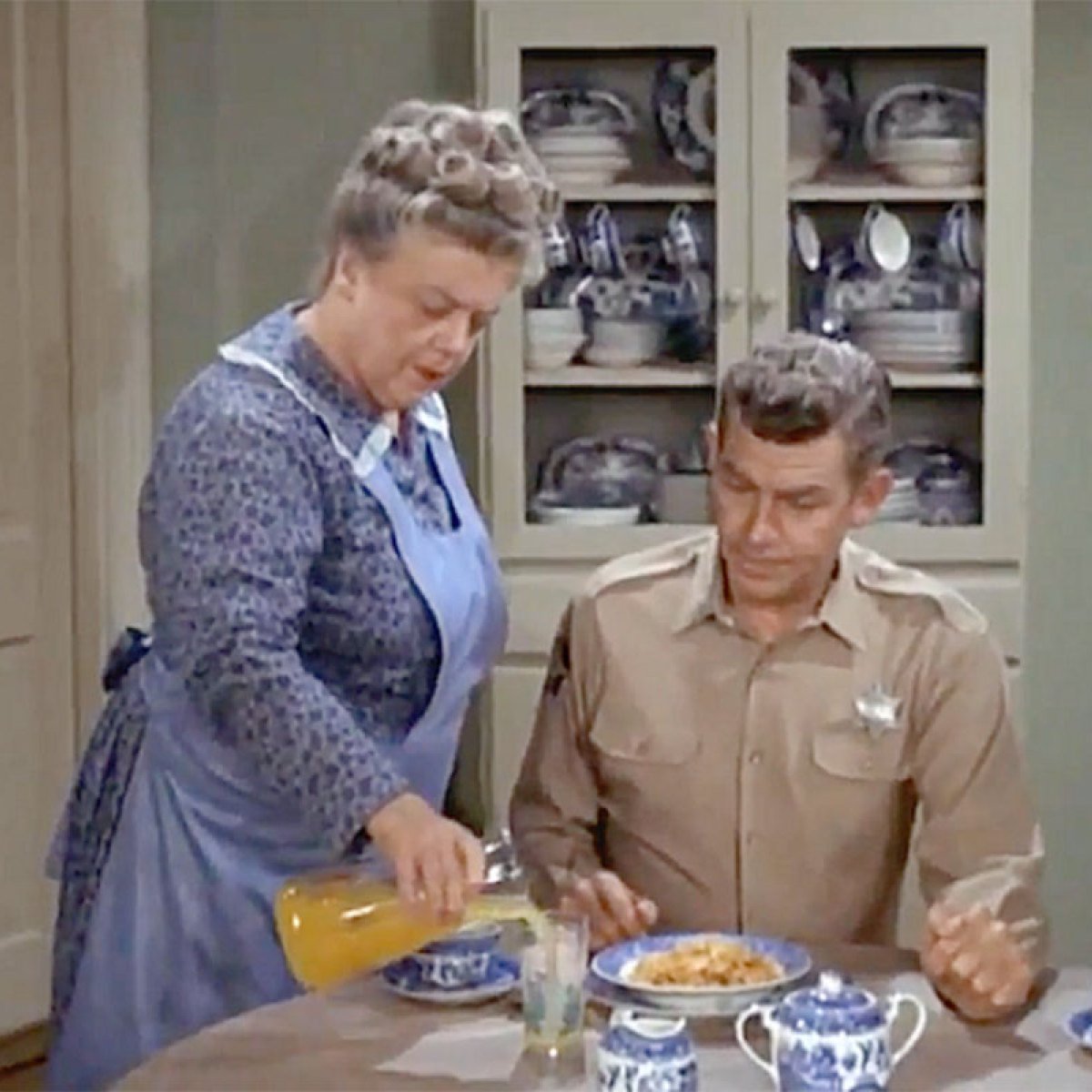
Not quite pitcher, not quite fancy wine decanter, the orange juice carafe is somewhere in between — and decidedly retro. With a flat bottom and goose neck, standing about 9 inches tall, it looks like the vessel full of OJ on Betty Draper’s kitchen table in breakfast scenes in Mad Men, and Aunt Bee’s in The Andy Griffith Show. Turns out, there’s a lot of them out there. On both eBay and Etsy (where I bought my bright and fun one, decorated with yellow stripes and graphic orange slices), you can search “vintage orange juice carafe” and find many variations. Yellow stripes, orange slices, whole oranges, green stems, and green leaves grace the sides of these carafes, made from around the 1940s to the 1960s and floating around the internet today. Some are sold individually; many come with matching glasses (a la these lemon-adorned ones on The Marvelous Mrs. Maisel). Some may even be lingering in the homes of older loved ones. My aunt (who lives with my grandmother) still drinks water from one of the classic glasses every night.
They’re made by a myriad of brands, but the two most prevalent on the aforementioned sites are Anchor Hocking and Libbey, two glassware companies that have been around since the early 1800s and are still producing kitchen goods and tableware today. Libbey told me that their carafes were made from the same glassblowing process that is used to make bottles for beer and other beverages. The shape of the neck and the thicker round rim (as opposed to, say, the pour spout and sleeker walls of a pitcher) likely exist to get a good seal with a plastic lid or stopper to keep juice fresh. Back in the day, it was a uni-tasker.
But I’ve found many more uses. I employ mine, its Libbey marking stamped on the bottom, mostly for my morning caffeine. It also works as a vase, and as a kitchen crock for some choice tools to keep next to the stove. I also like to use it for ice water on the dinner table, or a batch cocktail when a few friends come over (bonus if said cocktail is citrus-heavy). Without fail, someone always comments on how cool it is.
I hold the firm belief that one can’t have too many vessels of various shapes and sizes — but this might be my very favorite of them all, just as handy as it is well-designed, a statement even beyond the breakfast table.
Emma Wartzmanis a writer and editor living in Brooklyn.
The chef feels her power as a southern, Black, queer person through her dishes
“The biggest misconception about soul food is that it is unhealthy, not good for you, and that it’s garbage, that it’s trash. It’s just not true,” says chef Deborah VanTrece, as she de-stems and washes an enormous pile of collard greens. These greens are destined for a tortellini dish with a soul food spin. It’s this combination of the traditions and ingredients used by Black chefs in the South and the global cuisine that VanTrece and her Atlanta restaurant Twisted Soul Cookhouse & Pours are known for.
In almost every dish touched by VanTrece, a rich history comes to life. “Offal cuts, in my opinion, they represent survival,” she explains as she cleans pork chitterlings, or “chitlins,” as they’re more commonly known. “They were cast-offs, thrown away. But the less fortunate, [the] slaves, that was all they had to survive, and they were so creative in taking an intestine and cleaning it, and adding spices, herbs, and veggies to it.” She considers this laborious cleaning process a rite of passage. “That is the thing about soul food. People think it’s very simple and easy, but the techniques have been handed down through generations.” She boils the chitterlings in a vegetable broth, and serves with chimichurri and a dusting of cayenne pepper and paprika.
VanTrece pivots to focusing on her daughter, Kay, the general manager of the restaurant. “She refuses to eat chitlins,” she laughs, but goes on to say she still knows why they’re important to Black culture and the traditions of soul food. “Respect the technique and respect what went into it. Don’t allow other people to put it in your head that what you grew up with and what you ate is nothing,” she says.
The interplay between value and identity are two subjects with which the chef is deeply familiar, both as a soul food chef and a queer person. She says, “It was very hard to come out to my daughter. She was young, and the idea of her having to bear the responsibility of my decisions was so scary for me.” But VanTrece’s daughter supported her, and their bond is stronger than ever.
“Being queer, it has empowered me,” VanTrece concludes. “It has shut out the naysayers. No matter what, I can shut them out, and stay true to who I am, and keep going.”
The Lin-Manuel Miranda musical didn’t depict a rounded representation of the Latinx community in Washington Heights, but it at least excelled in its depiction of the Cuban table
Our conversations around food and culture boil down to a central feeling: representation — or sadly more common, the lack thereof. We want our foods and faces to be seen and heard outside of the walls of our homes and communities. As the daughter of a Cuban mother and Spanish father, I’ve been used to the world celebrating my dad’s culture while having much less of an understanding of my mom’s. Tapas, sangria, bold Rioja wines, sliced jamon, bull fights; even inauthentic depictions of Spanish traditions are at least a recognition of the real thing. I’m fortunate that I grew up in Miami, a place as close to Cuba as I worry I’ll ever get. Still, I never felt like I had much to point to as references of feeling seen as Cuban in mainstream media.
As an adult I have found comfort in the wonderfully charming and smart remake of One Day at a Time — sharp with its portrayal of the heartbreaking and all too common Cuban exile story, the importance of Vicks VapoRub to any Latin household, and an explanation of why Che Guevera, a man who served as Fidel Castro’s second-in command, is not the face you want to be sporting on your T-shirt — because, for some reason, we need to keep explaining this to people.
The latest source of joy from familiarity was a scene in In the Heights, the Jon Chu-directed movie adaptation of Lin-Manuel Miranda’s 2008 Broadway musical about a Latinx community in New York City’s Washington Heights neighborhood. The film has received mostly glowing reviews and boasts a 96 percent on Rotten Tomatoes, though it would be remiss not to mention the ongoing conversation about colorism and In the Heights’s lack of Afro-Latinx people (which, in real life, make up a large percentage of Washington Heights’s population). Not every Latinx person got to see themselves reflected in the story which celebrates the diversity of our community, so I recognize that there’s an exclusivity that comes with feeling seen. But for me, as someone who’s rarely watched the comforts of a Cuban-American household portrayed so tenderly, I’d like to highlight the gorgeously detailed, authentically Cuban dinner spread prepared by abuela Claudia (played by Cuban-American actor Olga Merediz).
Around one hour into the film, we see a room lit mostly by candlelight. The story’s central characters are gathered at Claudia’s apartment to welcome back Nina, a daughter of the community who’s been away at Stanford, with a feast. (When two characters talk about the upcoming dinner earlier in the movie they note how much they’re going to eat.)
When the dinner scene kicks off, we’re zeroed in on an ornate blue and pink plate of scattered Ritz crackers topped with equal slices of guayaba y queso — the consummate combination (created by a Miami Cuban baker) of guava paste with cream cheese that fills many of the pastelitos in Cuban bakeries; it’s so good that it’s not uncommon to top the two ingredients onto one another for a single bite, on a spoon for a big mouthful, or, as seen here, on a cracker.
The meal expands to a bowl filled with a not-yet-tossed ensalada de papa, a baking sheet filed with Cuban tamales, a white casserole dish emblazoned with a blue flower that’s filled with arroz con pollo — the chicken very much still on the bone; the most beautiful, deeply stewed ropa vieja I’ve ever seen studded with sliced olives; a glistening pernil resting on top of the oven; and perfectly round flan with a caramel that leans on the pale side. I gasped at the sight of all the food with as much delight as I did the Marc Anthony cameo some five minutes prior, in awe of seeing near-exact replicas of the dishes that filled — and continue to fill — my family’s table.
This montage of Cuban foods barely holds only 10 seconds of the film, but it was still one of my favorite moments of the movie. I know I am lucky to feel a particular sense of being seen during the movie’s runtime; there really was so much that resonated with me in In the Heights, from Abuela Claudia singing about her days in La Vibora, an area in Havana where my family spent time, to the immigrant parents doing everything in and out of their power for the children to succeed.
It gave me hope that the othering of my culture and its food could abate, even if in small ways. Perhaps someone seeing this film looked up what the heck was on top of those Ritz crackers and decided to try the guava and cheese combo for themselves; or they got a sudden craving for flan and picked one up from the local, Latin bakery. Maybe fewer and fewer people will tell me that Cuban food feels so “heavy” to them, a bit too starch-y, or lacking in salads. For me, there isn’t anything quite like it, and there’s never been a depiction quite as poignant.