Latest Posts

Never Ask a Food Influencer to Pick Up the Tab

Collage of a hand holding up a smartphone that contains images of sandwiches and poke bowls, over a background of hands holding up smartphones and money.

On the surface, getting paid to talk about food on Instagram seems like a sweet gig. But influencers say that the job gets exhausting quickly.

The first thing food influencers want you to know is that it’s extremely uncouth to ask about their rates — that is, the amount that brands pay them to advertise. “It’s the number-one question I get asked,” says Tramanh Tran, a 21-year-old influencer who goes by @babydumplingg on TikTok. “I don’t even want to tell my friends because the next time we go to lunch they’ll be like, ‘Oh, you can pay!’ or ‘Why did you make me Venmo you?’ I would never say to someone else, ‘Well, your dad pays for you!’”
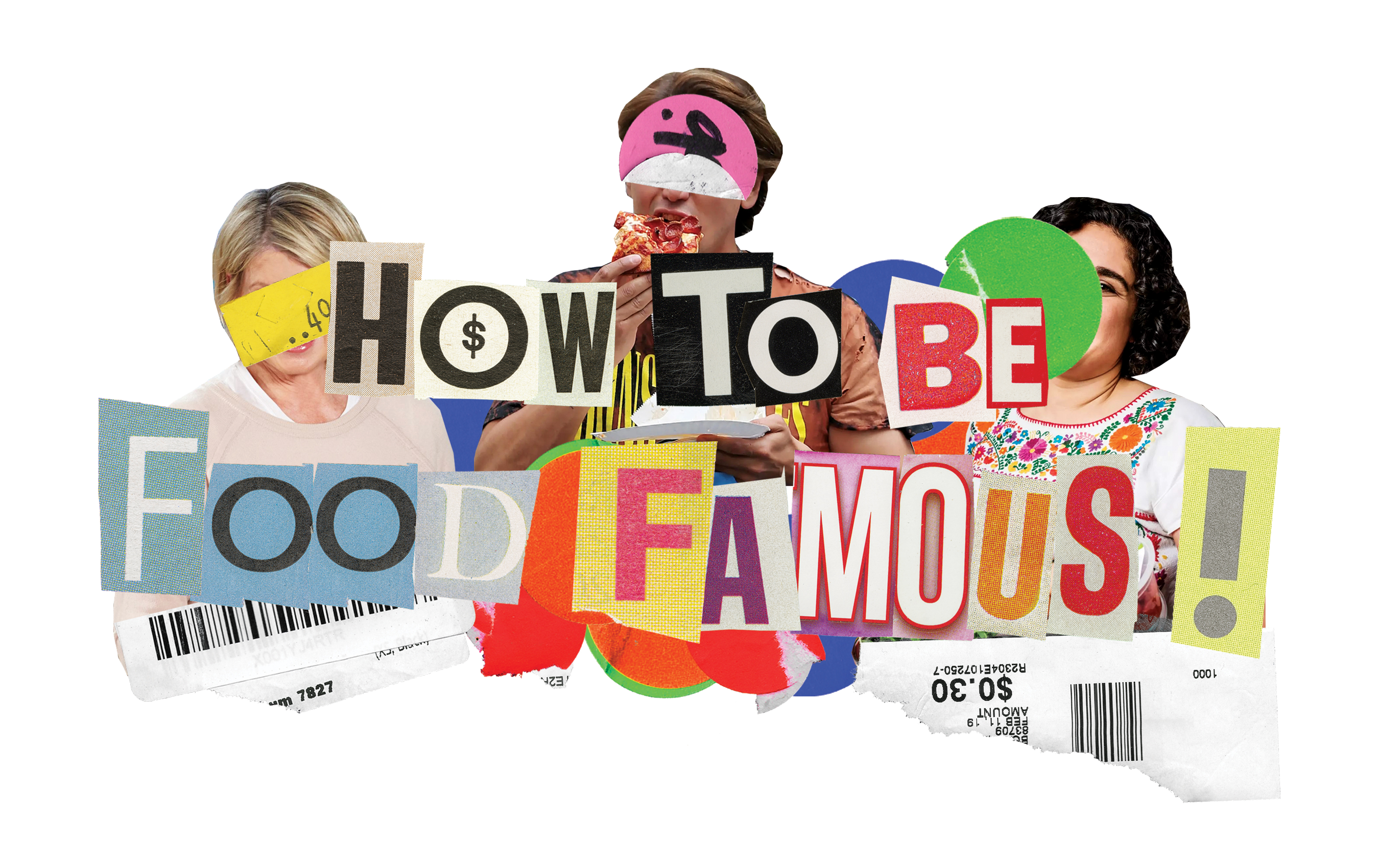
It’s easy to scroll through beautiful photos of elaborate ice cream sundaes or lavish brunch spreads on Instagram and think, “Wouldn’t that be nice?” or perhaps even, “Why should they get to make a living off of eating and not me?” And it seems like randos — often without professional cooking experience — are getting paid to do this all over the internet. The spectrum of food influencers runs the gamut from home cooks filming their dishes for TikTok and sharing restaurant pictures and reviews on Instagram to YouTube tutorials and ASMR mukbangs and simply posting straight-up food porn on personal blogs that are then shared and promoted on social media. There are a variety of ways to make money through this kind of influencing; the most popular by far is via brand deals, which function like mini commercials in which the influencer is paid to incorporate or shout out a particular product. (Those Instagram photos hashtagged #ad? They are brand deals.) Some influencers sign with agents or managers, who work like traditional talent agents — connecting people with opportunities and working out contract details like how long a company can use an influencer’s content and how much the influencer will be paid for it. Some strike out on their own, acting as their own business managers.

But the second thing food influencers want you to know is that turning one of the most central elements of human existence — food — into your job gets exhausting quickly. And there’s a lot of competition because there has never been a lower bar of entry to the world of food entertainment. In a post-TikTok, post-pandemic world, all you need is an iPhone, a $15 tripod from Amazon, and something interesting to film — a delicious-looking salmon bowl, a ritzy rigatoni, or just yourself enjoying unlimited sushi at an all-you-can-eat restaurant near your college campus — and there’s a chance you could become a food star overnight.

That’s what happened to Tran in December 2020 at one of said sushi restaurants. She’d joined TikTok only to make silly dance videos with her friends, but when her first video got more than 200,000 views, she started taking her account more seriously: Every time she went out to eat, she made sure to film herself (even when it annoyed her friends), and she continued to post more of the type of content that could go viral. After she had four or five viral hits, the talent agency Gushcloud reached out to sign her, in June 2021, and within six months, she was turning a profit. It’s not enough to support a full-time living, but she feels significantly more comfortable and is able to pay for her day-to-day college expenses.

Noah Swimmer sees this all the time: New food creators rise up from the platform du jour, hoping to turn their large audiences into a career. As a manager at Underscore Talent in Los Angeles, Swimmer represents 16 food creators, from OG recipe bloggers like Catherine McCord of Weelicious to YouTube sensations like Pro Home Cooks’ Mike Greenfield and now TikTokers like Owen Han, a USC student with no professional cooking background who built a following of 1.2 million simply by making sandwiches in his college apartment. When looking for new talent, agencies tend to represent influencers who have a proven track record of engaging and growing audiences, who are working in niche or unique spaces in the already saturated food market, or who demonstrate a talent or ambition to extend beyond a single platform. In return for negotiating better pay and more exposure, agencies will typically take around 10 percent commission.

There are three generations of food influencers, the way Swimmer sees it. The first are the food bloggers of the late aughts, who built loyal readerships by taking beautiful photos of the food they made or ate while sharing snippets of their lives — think Deb Perelman of Smitten Kitchen, Gina Homolka of Skinnytaste, or Bonjwing Lee of the Ulterior Epicure. The second arose from YouTube: home cooks or professional chefs with the know-how (and cash) to produce slickly shot videos of themselves cooking and eating on a level that rivaled the Food Network. It’s the era that made food personalities like Hot Ones’ Sean Evans and Binging With Babish’s Andrew Rea internet superstars. This second generation of food influencers made money via sponsored content (incorporating a product into a video) or through YouTube’s then-extremely lucrative automated ad-roll program.

Collage of several hands in black-and-white holding small clocks atop a background of kiwis.

TikTok changed everything. What would have taken a personal blog or a YouTube channel years to gain a sturdy audience and national recognition now can happen virtually overnight. This is the third generation of foodie influencer: People, particularly very young ones, build massive followings thanks to a streak of viral videos, and within about six months can expect an onslaught of emails from brands asking them to create sponsored videos.

But learning the ropes of influencerdom takes practice, and the problem about becoming famous very fast is that you don’t necessarily know your worth. “After I had a couple viral videos, HBO reached out and wanted to send me a Game of Thrones gift package, and other brands would give me, like, $200 to post a TikTok about them,” says Tran. “I accepted any brand that offered me money or free food because I was like, ‘That’s so cool!’ Looking back, I was kind of dumb for that.”

Emily Fedner, the 29-year-old brains behind the Instagram account @foodloversdiary, is thankful her career was, as she describes it, “more of a slow burn.” She launched the page in 2013 as a side hobby and didn’t reach the 100,000-followers mark until seven years later. “It wasn’t until the last two years that I started making an actual living doing this,” she says. Before that, she estimates she’d spent tens of thousands of dollars eating at restaurants and buying ingredients — new recipes cost her three to four times the normal amount to account for trial and error — as well as cameras, tripods, and lighting and audio equipment. Then there were the fees for hiring web developers, fees to set up an LLC, which she pays extra for so people can’t see her actual address. (“So that I don’t get stalkers,” she explains. “I’ve dealt with some weird situations.”)

It’s the emotional costs, though, that she’s found most difficult, and not just with the burnout that almost every creator experiences at one point or another. Fedner says that when she first started making real money, she felt an extreme sense of guilt. “Like many other people, I thought it was crazy to hear that influencers can make so much money,” she says. “But something my dad and my older sister told me was, ‘You’re paying yourself back for the last decade.’ I made no money and invested money, time, blood, sweat, and tears into building this. That’s a big misconception about influencers.”

Fedner, too, is frustrated by the expectation that influencers owe their followers financial transparency. “I’m grateful that money conversations and equal pay have become more transparent, but I do find it funny that people feel entitled to know what influencers make. What if I came up to a random accountant and was like, ‘How much is in your bank account? What’s your salary?’ It’s a loaded question because the assumption is, ‘Oh, my God, I can’t believe it’s worth that much!’ Because it is worth that much.”

There are other unexpected costs. “The most expensive part isn’t the butter or the sugar; it’s the time,” says Mia Starr, a 26-year-old cake decorator with more than 210,000 followers on TikTok. “It’s doing a ton of work for free, consistently, until an opportunity comes along.” Most major TikTokers post at the absolute least once per day, and nearly all recommend posting as much as possible to appeal to the mysterious and ever-changing algorithm or risk being a one-hit wonder. Starr has considered starting a channel on YouTube, where the videos tend to be longer and the deals can be more lucrative, but, she says, “the expectations for the production value are much higher.” Currently, she bakes about two cakes per week in her apartment, films herself decorating them in her bedroom, and shares them with her roommates and friends.

“There’s a paradigm shift,” says Swimmer. “It used to be that the goal was to transition someone from the digital space into a TV celebrity chef on one of the channels like Discovery or the Food Network. Now I think creators are finding that it’s actually more important to have control over their business and growth versus at the whims of studio executives.”

Rachel Fong, who started her popular YouTube baking channel Kawaii Sweet World in 2010 when she was just 12 years old, hopes to help fellow creators do just that. She’s in the process of launching a startup called Creator Labs; it connects food influencers to factories that make products influencers can then license and sell directly to their followers. Inspiration struck as she was trying to create a line of bakeware. “If you do a custom product, it’s going to cost you at least $20,000 in upfront fees just for inventory. I found the process difficult,” she says. Her ultimate goal is to help creators build a source of passive income that doesn’t rely on churning out as much content as possible.

Other influencers are thinking more broadly about their careers in the food world and turning to IRL ventures. Fedner, for instance, is now the co-founder of a pasta pop-up operating inside the longtime West Village Italian joint Raffetto’s. Which, of course, didn’t come without costs. “At one point when I was trying to launch the pasta pop-up, I was a server working five nights a week while trying to build @foodloversdiary. There was a lot of personal cost to my social life,” she says.

For most influencers, food or otherwise, brand deals are their main source of income, but nearly all monetize their followings in several ways at once, be it through paywalled platforms like Patreon or Substack, selling merch, or launching side businesses. That means being a content creator can add up to multiple full-time jobs. “It’s a dream job for me — I work my own hours and get to cook what I want, and I enjoy the editing process,” says Han, the sandwich influencer. “With that being said, there’s a downside: You work 24/7. I’m constantly thinking about what I’m going to be making next. I haven’t cooked for fun in such a long time because every time I make a dish, it’s an opportunity for a video. There’s literally no days off.”

Fong’s advice for hopeful food influencers: “Always get started in the easiest way possible. People ask me what DSLR or lighting kit to buy, and my advice is don’t worry about that yet. Just try! And see if you like it!” Becoming an online food person, then, isn’t so different from trying a new dish: After a bite or two, you’ll know whether it was worth the money.

Rebecca Jennings is a senior correspondent at The Goods by Vox, where she covers social media platforms, influencers, and the creator economy. She writes a weekly newsletter column about what’s new in the world of internet culture and lives in Brooklyn.
Marylu E. Herrera is a Chicago-based artist with a focus on print media and collage.
Fact checked by Kelsey Lannin
Copy edited by Leilah Bernstein


from Eater - All https://ift.tt/yFYXrMh

I’m Shillin’ It

A collage featuring McDonald’s and Burger King branding, cut-outs of fast food, Ronald McDonald holding his hands in a heart shape, and a drive-thru worker. Bottom left: the rapper Saweetie wears her hair in a tall top knot and a black dress. Center: Megan Thee Stallion wears a black satin blazer and bra top, her hair in loose waves and glam makeup. Next to her, a cut-out of K-pop group BTS in black and white formal wear. Top right: Travis Scott with his hair in braids and a brown shirt.

How chains like McDonald’s and Taco Bell are using hip-hop stars and famous musicians to infiltrate your mind and wallet

Three decades before anyone had ever heard of a Cactus Jack or an Astroworld, everyone wanted to Be Like Mike, and the endorsements for basketball supernova Michael Jordan came swift and heavy. The six-time NBA champion became one of the most marketed sports figures in history — starring in nearly 100 commercials by 2003 — with product deals ranging from his eponymous Air Jordan at Nike to Gatorade.

Jordan’s business choices had long been a massive cultural presence, but his 1990 partnership with McDonald’s brought in a new vanguard during a time when basketball and Black culture were becoming increasingly intertwined. En route to his first NBA championship, Jordan had established a reputation for dining at the eatery every morning for breakfast, and so the chain fashioned a burger named the McJordan after him, the first custom-issue branded meal of its kind: a Quarter Pounder with cheese, smoked bacon, and barbecue sauce. Initially, the sandwich was intended to be a monthlong limited release in select Chicago franchises, appealing to hometown Bulls fans. The overwhelmingly positive response, however, prompted an extension of the offering, branching out to Jordan’s home state and college stomping grounds of North Carolina and a few other states; the promotion ultimately ran from March 1991 to 1993.

As we moved deeper into the ’90s, the dominant cultural cache arguably turned away from sports stars and more toward musicians, particularly those connected to hip-hop and R&B. After the success of cultural curators such as Fab 5 Freddy in connecting uptown hip-hop and graffiti culture with the downtown club kids and tastemakers, and the capitalist triumph of Run-DMC’s Adidas endorsement in the ’80s helping to launch the group into the mainstream, it quickly became clear that the hip-hop industry was a ripe demographic for marketing and collaboration. Music executive Steve Stoute affirmed this trajectory in his book The Tanning of America: How Hip-Hop Created a Culture That Rewrote the Rules of the New Economy. “If really smart corporate executives had wanted to save money on all that market research about what the next new thing was going to be,” Stoute wrote, “they would only have had to turn to the hip-hop community — who were doing the research anyway, selecting trends that looked promising, creating overnight word-of-mouth promotion, and even adding their own product development ideas.”

The apex by the early aughts was the introduction of a new McDonald’s slogan and subsequent jingle that has held sustained global cultural resonance — ba-da-ba-ba-baaaa, I’m lovin’ it — with the assistance of Justin Timberlake, the Neptunes, and Pusha T. In his book, Stoute described the process of writing the jingle as “reverse engineering.” The approach was simple — presented with a skeleton jingle arranged by German ad agency Heye & Partner in collaboration with the music production company Mona Davis, the Neptunes produced a full-length single for Justin Timberlake, intending to penetrate the pop culture market with the slogan before publicly associating it with the McDonald’s brand. The track “leaked” to the public in August 2003, with a subsequent music video shot by Paul Hunter, who had also done “Señorita”; publicly, it was speculated that the song would be on Timberlake’s second album. On September 23, 2003, McDonald’s announced the launch of the global “I’m Lovin’ It” brand campaign, which included five new commercials globally, production from the Neptunes, vocals from the Clipse (Pusha T’s rap duo with his brother No Malice), and Justin Timberlake’s brand partnership.

The ”I’m Lovin’ It” brand campaign, essentially an “audio logo” that helped pull the enterprise out of a six-quarter slump, is McDonald’s longest-running marketing campaign to date. In attempts to build brand relatability, McDonald’s engaged in the tried-and-true tradition of “racial capitalism” — a historically and predominantly white corporation (at the executive level) deriving both social cachet and economic value from associating with Black and other nonwhite communities that had long found community within the world of hip-hop. Throughout the 2000s, McDonald’s would continue to revisit that well and expand its reach into urban demographics, picking subsequent brand partnerships with artists like Beyoncé Knowles’s original girl group Destiny’s Child, which filmed a commercial for McDonald’s in 2005 (McD’s also sponsored their tour).

A kaleidoscopic collage centered around a McDonald’s road sign, pink packets of Cajun dipping sauce, a woman eating french fries, and the McDonald’s logo.

Different pieces of the template would attempt to be replicated at other chains, to mixed results. Mary J. Blige’s 2012 partnership with Burger King, featuring a cover of her song “Don’t Mind” remixed to highlight the new Crispy Chicken Wrap product, was a highly contentious campaign and was ultimately pulled. Earlier this spring, Pusha T released a McDonald’s “diss track” for an Arby’s commercial, laden with insider references that maximize the impact for the most culturally attuned within his fan base: a jab at the 2003 Justin Timberlake campaign with “I’m the reason the whole world love it” as the opening line, a curated bar from Jay-Z’s classic album The Blueprint, and a not-so-thinly-veiled narcotic double entendre as a coda to the verse from the King of High Fashion Diet Coke Rap. Melody gimmicks of this sort still persist: In 2018, Wendy’s created a whole mixtape that became a viral sensation and topped the streaming charts. More recently, Doja Cat was under contract to provide a jingle for Taco Bell on TikTok, a commitment she delivered with less than enthusiastic aplomb.

But recent years have seen a flurry of artists teaming with fast-food brands: BTS, J Balvín, Mariah Carey, and Saweetie, who is perhaps the queen of the unconventional palate, all launched custom meals at McDonald’s. Megan thee Stallion went into a fast-food partnership of her own with Popeye’s; Doja Cat, with Taco Bell. They all follow in the footsteps of Houston rapper Travis Scott, whose McDonald’s sponsorship netted him up to $20 million: He was paid $5 million up front for the meal and original endorsement, but when the meal quickly became a TikTok trend and merchandise sold out, Scott made an additional $15 million in revenue from merch sales.

It’s easy to see why artists are signing onto these sponsorships, which are more configurable than showing up in a commercial or singing a jingle. And leaning way in can be more lucrative. As streaming — and the subsequent shift in compensation scales — became increasingly ubiquitous in the 21st century, direct music partnerships became less and less beneficial for the artist. The one-off payout for jingle writing is subject to the whims of a company and the perception of an artist’s negotiating power, with limited possibility for recourse. Timberlake made an estimated $6 million from what would end up being McDonald’s most significant investment in its marketing strategy to date; Pusha T has alleged that he and his brother received a one-time lump sum of “half a million or a million,” though he’s continued to work behind the scenes in the world of fast-food jingles, also receiving credits for the Arby’s slogan “We Have the Meats.” The evolution of music publishing toward digital-service providers (now at $13.4 billion, or 62.1 percent of global recorded music revenue) compelled many artists to build their verticals out as fully marketable brands. In the past, these deals may have been perceived by fellow entertainers as gauche or overly commercial, but now they’re bids to survive the compensatory pittances of streaming revenues and commonly accepted exploitative standards in recording contracts. Where artists once reserved their sponsorship appearances for ad campaigns in foreign markets or fees for a feature verse on an international artist’s track, that’s no longer the case. And companies like McDonald’s can maintain an urban presence by creating original melodies at a much lower rate.

These new deals are constructed as brand extensions between chain and artist, in which the artist is essentially a special-purpose vehicle partaking in part of the risk, part of the design, and ultimately part of the equity profits McDonald’s launched a J. Balvin meal in October 2020 with a planned merchandise line pairing that was canceled and refunded due to production challenges. K-Pop supergroup BTS, who are known for having some of the most loyal fans this side of the solar system, launched a meal that ended up outpacing Scott’s in popularity, pairing their rollout with a merchandise drop and in-app content for a global fan base. Not to be outdone, their “Butter” co-artist, rapper Megan thee Stallion, went into a fast-food partnership of her own with Popeye’s, which had previously created a controversial craze over its chicken sandwich at the expense of its employees; the self-proclaimed “H-Town Hottie” would not only be releasing her own twist on the same sandwich, but also her own “hottie” sauce, a merchandise line, and ownership of up to five Popeyes franchises.

@mcdonalds

ready class? @officialsaweetie shows u one way to eat the Saweetie Meal ❄️ #mcd #mcdonalds #saweetie #thesaweetiemeal

♬ original sound - McDonald's

While the size of these endorsement contracts may seem colossal, the perceived benefits for the fast-food industry — chief among them being a diversion for coordinated lobbying against the ongoing labor fights for service workers across the nation — make the gargantuan investments worth it. Since 2012, the restaurant industry has been at odds with an uprising of service-class workers that would ultimately turn into the Fight for 15. Companies such as McDonald’s were facing accountability in the press for lobbying with the National Restaurant Association to stave off efforts to raise the wage floor, persuading the Trump administration against paid sick leave at the outset of the COVID-19 pandemic, and not providing employees adequate access to PPE, leading to countrywide strikes against the world’s second-largest private employer. By the time George Floyd became a national name, any messaging that McDonald’s tried to put out in solidarity was met with open revulsion: Do Black lives matter when they work in your restaurants? McDonald’s U.S. president Joe Erlinger published an open letter on LinkedIn, claiming to “recognize the impact” recent events had; the company would go on to donate $1 million to the National Urban League and the National Association for the Advancement of Colored People (NAACP). In the midst of the horrors of the political administration, the backdrop of ongoing police violence and racial trauma, and a rising working-class movement, the fast-food industry turned to musicians for support.

Prior to the calamity of Astroworld 2021, which has rendered Travis Scott a commercial liability, Scott served as a perfect vehicle for a PR rebound for McDonald’s. The “Sicko Mode” rapper’s entire approach to engaging with his fan base is not just musical, but an experiential consumption of derivative works; a sentimental connection built out of a desire to lose yourself in the overstimulating roller-coaster ride of his persona, musical journey, and accouterments to match, from the merchandise bundle sales (leading to a highly publicized number 1 dispute with Nicki Minaj) to a Ferris wheel on stage. To engage in the Travis Scott experience, in McDonald’s, or anywhere else is to take another step in making a parasocial relationship as a fan just that much more tactile, no matter how scripted or transactional the circumstances around the product may be. The promotional commercial of the Travis Scott meal is a reflection of as much; a nostalgic allusion to the Happy Meal Toys of his childhood conflated with his quasi-avatar rendering, a version of himself that has existed in digital mediums such as Fortnite.

Branded collabs are a powerful public relations tool. They empower the cult of celebrity to serve as a distraction for ongoing operational issues, and they extend the artists’ fan base and demographic as evangelists for a product by default. Given the logistical supply-chain issues that have plagued the COVID-19 pandemic, the craze behind the promotional collaborations also offers a bit of breathing room: McDonald’s can streamline menus for thousands of Quarter Pounders with bacon and fries with barbecue sauce as it works to attend to ingredient backlogs.

All of these outcomes are great optics for fast-food corporations, thus repeatedly justifying the seven-figure price tags for the celebrity engagements. But it should also be stressed that these are only symbolic reparative acts, deemed an easier accommodation than capitulating to the quality-of-life requests made of their tens of thousands of Black and brown employees. It’s easier to feign inclusion via consumption versus establishing a firm commitment to change; that is a level of accountability that has proved to be as evasive as the Hamburglar.

Shamira Ibrahim is a Brooklyn-based writer by way of Harlem, Canada, and East Africa, who explores identity, cultural production and technology as a critic, reporter, feature/profile writer, and essayist.
Marylu E. Herrera is a Chicago-based artist with a focus on print media and collage.
Fact checked by Dawn Mobley
Copy edited by Leilah Bernstein


from Eater - All https://ift.tt/hTVv7ZS

Beyond the Ivy: What Makes a Celebrity Hot Spot

In the center foreground a woman with dark hair and wearing a checkered blazer holds up her hand to block her face from a camera flash. In the middle ground, celebrities Rihanna, and George and Amal Clooney are collaged surrounded by cut-outs of food. The black wood facade of the Malibu location of restaurant Nobu, marked with a light wood sign and all-capitalized, serif letters, serves as the background.

The reason celebrities like Justin Bieber and Kim Kardashian all flock to the same restaurants

In a 2008 blog, gossip monger Perez Hilton described Jennifer Aniston as she attempted to get lunch at the Ivy in Beverly Hills, writing, “If you’re a celeb, you usually hit the Ivy on Robertson Boulevard to get the paparazzi to take your pic, right? Everyone knows that it’s not the place for a celeb to go low pro. Anyway, Jennifer Aniston must be really dumb or really really lame. On Friday, she showed up to the Ivy for lunch and got all pissy about the attention she garnered from the paps.”

The article, written long before Perez attempted to rehabilitate his public image and apologize for the cruel and often misogynistic commentary he wrote about his famous subjects, is dripping with venom that’s shocking for a 2022 audience. But for anyone who paid attention to pop culture in the early aughts, the blog and the restaurant it features are cultural relics worthy of the Smithsonian. For years, the Ivy provided similar blog fodder, acting as the ideal backdrop for celebrity romantic reconciliations, business meetings, and other photo ops for tabloid heavyweights like Nicole Richie, Tara Reid, Paris Hilton, and Kim Kardashian. To be snapped on the Ivy patio meant something: You, or someone you happened to be sitting close to, wasn’t just famous, but famous enough for the paparazzi to make a living off of. You were helping to uphold the tabloid economic ecosystem.

What was once so spectacular about the Ivy has waned in recent years, though the restaurant itself remains a popular dining locale for Hollywood power brokers. Celebrities change hot spots, hideaways, and pap walks faster than outfits, but they almost always collect in the same places, moths to the flash of a paparazzo’s camera as long as it suits them.

Craig’s in West Hollywood is among the latest restaurants in the Ivy mold: Just one cursory Google search shows that within the year, celebrities such as Lizzo, Muni Long, Olivia Jade, Kim Kardashian, Nicky Hilton, Eric Dane, and more have dined at the establishment, their visits as heavily papped as a patient at the gyno. For celebrities, the appeal of Craig’s is that it provides the best of worlds both private and public; the paparazzi are lined up outside, offering the perfect location for reliable, flattering, and largely controllable photo ops. If you’re a famous person in the middle of a PR crisis, a stroll into Craig’s — dressed in your trendiest finery — is as good an opportunity as any to show off that you’re doing fine. Consider Vanderpump Rules star Lala Kent, who was all smiles and light-bouncing cheekbone highlight when she made an appearance at the height of her dramatic separation from her fiancé, producer Randall Emmett.

What’s appealing about Craig’s, as opposed to the Ivy patio, is that the paparazzi exposure lasts only as long as the celebrity wants it to. Inside, the windows are tinted and the photographers are gone, allowing celebrities to eat — or not eat — and slouch, or get drunk, or act in all the photographically unflattering ways that us regular folk take for granted. Even when indoor dining was off limits at the beginning of the COVID-19 pandemic, it debuted a chic outdoor-dining structure with wood-paneled walls and glass partitions, which shielded diners from prying outside eyes. Craig’s clientele wants to be seen, but on their terms and with their contrived desire for privacy.

Other restaurants across the U.S. promise the same model: Carbone (in New York and Miami) offered a recent backdrop for not one but two dates for the short-lived, highly publicized romance between Kanye West and Julia Fox; the famous-ish like Amber Rose and Tyga flock to Miami’s Strawberry Moon located in the Good Time Hotel (co-owned by Pharrell); the more low-key celebrities love the leather booths of Little Dom’s in Los Feliz in Los Angeles.; and surf-and-turf restaurant Catch (in NYC, LA, Aspen, and Las Vegas) hosts Gabrielle Union, Dwyane Wade, and Justin Timberlake.

Perhaps no other restaurant has reached the level of celebrity clout as Nobu in Malibu, where Robert De Niro is a co-founder. (For me personally, Nobu is as much of a celebrity as the famous people it regularly hosts.) In the early months of the pandemic, the Japanese restaurant temporarily closed its doors, leading to a slew of celebrity broken hearts. After its Malibu location returned with outdoor dining in June 2020, attention-starved famous people reemerged like bears post-hibernation. And they continue to come: A couple months after her pregnancy announcement, Rihanna was spotted at Nobu. Justin and Hailey Bieber, the KarJenners, Kanye West, George and Amal Clooney, and many, many more have all been spotted there recently.

Celebrities who legitimately want privacy know how to go unphotographed, even while dining out. There are places — like the private membership club Soho House — that cater to these needs, offering heavy security, regulated phone use, private rooms, and low, dark lighting. For those wanting something more low-maintenance, there are places like Little Dom’s , which offers semi enclosed booths and a local crowd who are less eager to appear excited by the presence of Jon Hamm or Ryan Gosling. Of course, there’s still the risk of being iPhone-photographed by a fan, as Tom Holland and Zendaya experienced while having a meal at an unassuming Thai restaurant.

But even those kind of photos can work in a celebrity’s favor. A creepshot of Holland and Zendaya on a casual date is comforting to the celeb-obsessed the same way it is to a grandmother who needs to get her eyes on you to make sure you’re eating enough. It’s a reminder not only to order the pad see ew next time you’re in Universal City, but also that your favorite celebrity couple is both relatable — they, too, eat sometimes! — and going strong.

There are standout cases where celebrities are photographed under duress — maybe they got too fucked up at the club or it’s a windy day -— but the relationship between famous people and the paparazzi/tabloids is largely symbiotic. Dine out enough around New York City and you’ll likely find yourself sitting next to Maggie Gyllenhaal, Justin Theroux, or Succession’s Cousin Greg at some point, without a photographer in sight. That’s because they know where to go where the paparazzi are not. Meanwhile, go to the Sant Ambroeus Soho location and — like at Craig’s — you’ll be blinded by the paps’ lenses as they snap Naomi Campbell, Taylor Swift, or Sarah Jessica Parker. (It’s fun and stressful to witness, almost like going on safari!)

Former Real Housewives of Beverly Hills star Lisa Vanderpump had a quote to describe her small Los Angeles restaurant empire (which has its own celebrity following with fans like Jennifer Lawrence): “Villa Blanca is where you take your wife, SUR is where you take your mistress.” [Editor’s note: Villa Blanca is now permanently closed.] To rephrase it for our purposes: Craig’s is where you take your friend who follows E! News, and a nameless sushi restaurant in a Valley strip mall is where your famous friend takes you.

Mariah Smith is a comedian, writer and producer in Los Angeles.
Marylu E. Herrera is a Chicago-based artist with a focus on print media and collage.
Fact checked by Kelsey Lannin
Copy edited by Leilah Bernstein


from Eater - All https://ift.tt/fuxWzAw

I’m a Food TikTok Star. Here’s What I Wish My Followers Knew.

Three photos, all of one young, tanned man, interspersed with photos of microphones, video cameras, and food like a banana smoothie bowl.

Nasim Lahbichi on the realities of giving your full self over to your followers

Brooklyn native Nasim Lahbichi always enjoyed sharing his recipes with friends on Instagram, but it wasn’t until the COVID-19 pandemic began in the spring of 2020 that he thought to turn it into a career. Newly graduated from Manhattan’s Fashion Institute of Technology in the and with no job prospects in sight, Lahbichi started posting his cooking content to TikTok — because why not? He didn’t have anything else going on, and it was one way to interact with people without risking anyone’s health.

Two years later, Lahbichi has 268,000 Instagram followers and 493,000 followers on TikTok. He publishes approximately two recipes each week inspired by everything from his heritage (his father is from Morocco and his mother is Puerto Rican) to astrology (his rising sign: Virgo) to the new season of Bridgerton. He’s partnered with brands including Urban Outfitters and the TikTok platform, and he’s now making a living as a content creator.

Lahbichi sat down with Eater to share his insights on becoming TikTok famous, the importance of community, and what he wishes people knew about his nontraditional career.


I always considered myself a creative, and I am so humbled to have the chance to use visuals and good food to help those who don’t have the physical access to these cultures open their minds and hearts through sustenance.

@lahbco

the biggest scandal of all is where these pancakes originate from #BridgertonScandal

♬ Wildest Dreams - Duomo

In October 2020, Thrive Market reached out to me about doing an ad, and that’s when I realized I could start making a living doing this. I eventually worked with TikTok on a campaign called “Learn on TikTok.” They were reaching out to creators who were teaching others how to dance or how to cook or doing arts and crafts. Realizing that what I’m producing is worthy of compensation was a turning point. Educating people is still my main goal, but making a living off it allows me to do more. It also took away the stress of looking for a job: I can make a living off my creations and be able to put more effort and love into it.

Unfortunately, there are plenty of brands that think creators should do this work for free. This is an issue in the industry — brands will reach out assuming exposure or free product is worthy payment for a video that takes me an entire week to create, not to mention that I’m paying for the film equipment and the lighting. Utility bills can’t be paid for in free protein bars. I don’t even bother responding to those requests because it’s disrespectful to a creator who puts so much time and effort and mental energy into their work.

I will say, though, I basically worked for free for six to eight months before I started making money from it. My friend Justine [@Justine_Snacks on TikTok] and I talk about this a lot. We’re both very transparent about what we’re being paid, so that way brands can’t take as much advantage of other creators. There’s such a discrepancy between how much certain operators are being paid.

I personally don’t like to be called an influencer because I think there’s a negative connotation with that category of creators. When I think “influencer,” I think of YouTubers who care more about followership, analytics, and sponsorships. There’s a lack of empathy associated with many influencers. I call myself a content creator because, at the end of the day, I am a creator. I like to think that I build community and create a space for people to learn. Outside of cooking, I’ve been playing with makeup a lot more in my day-to-day life while sharing glimpses of it in my videos; I had a mother tell me that her young son started wearing nail polish because he liked mine. It’s really cool to inspire others to be their truest authentic self. At the end of the day, I do influence other people in terms of food, to nourish their mind, body, and soul.

There’s still a negative stigma with this work. People think that being a creator, or an influencer, is an easy job. Yes, it’s not as physically taxing as some other jobs. (I did a pop-up at a restaurant recently, and I gained even more respect for people in the service industry. The aches in my body the next day were insane.) But this job impacts creators like myself in other ways that can be taxing, mentally and emotionally.

A typical week for me includes lots of filming, recipe development, meetings, and moderating comments and engaging with the community. I test my recipes nonstop. I’ve been working on a chocolate cake recipe. I made seven chocolate cakes last week, five of them in two days. It’s super frustrating to have seven cakes not work out and know that I have to do this for an ad that has a certain deadline. I will usually film four hours, three or four days of the week. A lot of people don’t understand that online creators are on 24/7. There’s never a time when I’m not thinking about work. My roommates have corporate jobs where, once they close the laptop, they’re done for the day. I’m writing a recipe at 11 p.m. or writing a blog post at midnight just so that it can go up in time the next day. Then there’s interacting with the community, which I’m so grateful for, but it can be emotionally taxing.

@lahbco

i made this 8x and you should too #chocolatecake

♬ Coffee Shop - Late Night Luke

There are people who send the most beautiful, admirable messages. And there are people who open up and are so emotionally vulnerable with you. I understand why they reach out to me. I like to think I create a safe space for people, but also sometimes I don’t have the capacity for it. It’s a lot, and it hurts me to have to shut them down or tell them, “I’m sorry, I can’t handle this right now.” Setting up boundaries can be really challenging in this industry. I’ve been trying to set aside more time for myself.

What’s crazy about social media is how many people don’t understand that I’m still a person with feelings, and I have to deal with a lot of personal issues on top of whatever they’re projecting on me. Projection is the main source of so much hate. People will project their insecurities, their own self-hate, their own lack of self-worth onto me and others. It’s not kind, and it’s definitely not warranted.

I went through a rough time recently with an important relationship ending, and it’s put me in this weird space; I’ve always been deemed as this positive light in many people’s lives online, but I’m also deeply sad right now. I don’t know if I should be sad online. I was open in my content about going through a rough time, but I made a point to do this thing where I would say “good morning” and “goodnight” every day, saying it to my online community in place of the person who was no longer a part of my life. There are folks who messaged me, saying, “I don’t have anyone who tells me good morning or goodnight, and it really makes my day to have you say that to me and it truly does make my day better.”

I’ve also accepted that I can’t be my best self when I’m tired or when I’m not respected or not respecting myself by overworking. Burnout is really easy because you’re constantly feeling the need to reinvent yourself. That’s something that I’m constantly trying to figure out. What do I share? Should I share this part of myself? When is it appropriate to share my thoughts, for example, with all of the major geopolitical events happening around the world right now?

There are people who expect me to talk about things that I have no expertise on, that I don’t know about. I understand that they see me as a platform and a voice that has influence. But I also don’t want to share false information. I don’t want to say the wrong thing, and it’s so easy to do so if you don’t understand what you’re talking about.

I want the creator space to move away from the selective and limited information that social media provides. One of my mentors, Sophia Roe, has talked about this before: If you think I’m not doing enough, that means you have to do more. I really wish that there’d be more empathy and less of an expectation that everyone has to be perfect. That the people that you look up to can’t make mistakes. I can teach you how to make a cake or how to whip up a tagine, but I don’t know everything about Ukrainian-Russian politics or everything else going on in the world. It’s very interesting being pigeonholed into spaces where you never asked to be put in the first place.

Two areas where I’m very passionate are supporting the LGBTQIA+ community and supporting the efforts for food sovereignty and food equity. I want to do as much as I can to help communities in need, who don’t have access to food. So something that I’ve been incorporating into every single brand partnership is including a giveback component that allows the brand to donate alongside me to an organization or group that we both align on. Recently, I learned that a brand I work with regularly has decided to add my donation structure into their influencer program. So from now on, they’ll donate to an organization on behalf of everyone they work with. That was really beautiful to hear.

@lahbco

this is what i imagine rihanna’s (food) baby looks like #toast

♬ original sound - lahbco

In terms of future goals for my career, I have a couple in mind. I don’t believe that social media is sustainable as my only outlet for the long run. I don’t want to deal with the lack of creative freedom or the pressure to make certain content garner a lot of attention just because it’s a partnership. I’ve made it a point to make advocacy work a part of many future initiatives, giving back to organizations I support and admire. As COVID regulations ease a bit, I hope to help bring people together around food, culture, and community.

At the moment, I’m collaborating with a friend on an event series that lets us bring people together in order to spark conversation and create a space where people of all backgrounds are welcome and validated. A goal of mine is to eventually return to my roots in design and start a company focused on the hospitality industry. I want to curate and create spaces for queer people of color, by queer people of color. There are not enough queer spaces and spaces for pride of all backgrounds to flourish, which is why these environments must be accessible.

I constantly give credit to my parents for raising me with humbleness, that everyone is worthy of time and space. It makes me wonder how much more peace we would have if everyone were happier, able to be themselves completely, able to live life however they want, without the fear of being torn down by the systems that make it harder to just get by day to day. I only hope that folks will embrace more compassion, empathy, and solidarity both online and offline in the future because it is imperative for a more just world.

Nasim Lahbichi is a cook and content creator born and raised in Brooklyn, NY. His goal is to help curate spaces where folks can gain a sense of power in the kitchen, and at the table, to feel at home and safe.
Marylu E. Herrera is a Chicago-based artist with a focus on print media and collage.
Copy edited by Leilah Bernstein


from Eater - All https://ift.tt/ftieXwv

Why Are American Chips So Boring?

International chip flavors seem to have all the fun. But to get chip flavors like hot pot or fried crab in America, the snack industry would have to change the way it does everything.

Everyone knows that visiting another country’s grocery store is one of the best things about traveling. But it is also one of the most infuriating, because here you are, confronted by all these things you now wish your own grocery store carried: Why don’t I have paneer cup ramen or jarred hot dogs? (I actually do not want jarred hot dogs.) Nowhere is this frustration more prevalent than in the potato chip aisle. All around the world, people are enjoying flavors like hot pot, lamb and mint, poulet roti, and spicy Korean ramen. In America, we’ve been stuck with sour cream and onion, and our most “exotic” option in decades has been the one-note burn of “Flamin’ Hot.”

For years I’ve tried to wrap my head around this divide. For starters, many of these international flavors are manufactured by Frito-Lay, so presumably they could just make the same recipes here. And on top of that, there seems to be demand, at least anecdotally. Every time a friend of mine posts a chip they’re eating in another country, their comments light up with people begging them to bring some back. Blogs like Lay’s Around the World collect reviews of international offerings, Reddit’s r/Chips has more than 3,000 members talking about where to find more interesting flavors, and YouTube is full of international snack reviews. On top of that, Takis have taken off, proving there’s a market for bolder flavors. So why do chips in the U.S. still suck so much?

To understand why I can’t buy India’s Magic Masala chips at Target, we first have to understand how chips and other snacks are produced. And according to Jason Cohen, CEO of Gastrograph AI, the whole process is broken. Gastrograph is a company that helps food companies develop new products by using AI to target specific demographics. “All of the tools that exist today are geared towards making generally acceptable products,” he says. “It’s the bell curve.” Flavors like barbecue, sour cream and onion, and plain salt are produced because everyone likes them; and Flamin’ Hot only arose after a critical mass of people sought them out.

The search for the most broadly acceptable flavor is how chip development is done everywhere. However, what is considered “broadly acceptable” changes from country to country. “You can build a generally acceptable targeted product in a more ethnically homogeneous country,” says Cohen. The U.S. is huge, diverse, and has tons of regional differences. “So when you start doing traditional consumer testing, it’s about the lowest common denominator.” In France the lowest common denominator gets you a poulet roti chip, and in China a spicy crayfish chip, and in Kazakhstan pickles and dill. Here, we get endless riffs on cheese and onions.

Given that the U.S is a big country, you’d think that if 15 percent of the population is interested in a hot pot chip, that’s still millions of people these companies could be reaching. But according to Cohen, the way research is done usually won’t catch those people who want more unusual flavors. When choosing people to taste-test new products, major snack companies look for “heavy users,” or people who eat chips around four times a week. That volume likely has to do with how a lot of people eat chips — as a side with a lunch sandwich or soup, requiring a flavor that doesn’t overpower whatever it’s being paired with. But even if you’re buying chips to eat independently, that’s a lot. “The average consumer doesn’t eat chips four times a week. So they’re choosing people who are already dedicated potato chip eaters,” which holds back making more targeted products.

Furthermore, it ignores people who are not currently chip eaters, but who might eat them more if there were more interesting flavors around. And it ignores how much someone may like chips to begin with. To determine whether a new flavor is worth making, Cohen says chip companies have test subjects do a side-by-side taste test with a chip already on the market. And for them to produce it, the majority of the tasters must like the new chip more than what already exists. “Half the people in that panel could say, ‘I don’t know. I like this one at a six and I like this one at a five,’” and 15 percent of the panel could say the new chip is the best thing they’ve ever tasted, and the company still won’t make it, says Cohen. “They don’t base their decisions on the magnitude of preference, they base it on the mean of preference.”

Mark Lang, associate professor of marketing at the University of Tampa, says this unwillingness to take risks on products extends to manufacturing and retail as well. “A product has to appeal to more than half the people in the country to fit into their factories and take up the millions of units that they put through their factories,” he says. Even if Lay’s already manufactures these flavors in other countries, in order to avoid spending the money developing and testing a new recipe, “they need flavors that 60 percent of the population want to buy. That just knocks off all that cool stuff.” And retailers too don’t want to take risks on putting something on the shelves that won’t move, or won’t move as much as what’s already there. “If you can’t sell 8 million units in the second half of next year, we’re not talking to you,” says Lang of the prevailing retail attitude. “Because we can sell 8 million units of salt and vinegar.”

As always, it appears commerce is the death of art. Decisions are based on what has already been sold to people already buying, not what could sell to people who didn’t even know they needed king crab with XO sauce chips in their life. But according to Lang, most people do not share my singular obsession with eating weird chips. He points to studies done every year by the NPD Group, a consumer data research group that publishes an annual analysis of the American kitchen. “It astonishes me how much that analysis shows nothing,” says Lang. “It’s still peanut butter and jelly, pizza, ham and cheese, macaroni and cheese, hamburgers. The bulk of the country hasn’t changed at all.”

Lang says this can be described with the diffusion of innovation theory, a social science theory that explains how ideas disseminate through a population. “The innovators are only two and a half percent of the population; those are the people who are always first in trying and sharing new things,” he says. “And the early adopters are 13 and a half percent.” That roughly 16 percent of the population comprises those who may be interested in these new flavors. As it goes, that’s not enough to change the way the snack industry is built.

So what would change that? Cohen says his goal is to get companies to think of their products as a portfolio, with each dominating a small market, rather than each product being broadly popular. “If you develop five products and 20 percent of the population likes each of those products, now you have a really strong brand portfolio that [hits] 100 percent of the population,” he explains. Lang says it could also just be a matter of changing how companies import. They already make the chips elsewhere, so it’d be easy enough to run packaging in English and ship things here — though currently supply chain issues may add yet another hurdle to our collective shrimp-chip enjoyment.

Maybe the data is correct and the market just isn’t there. But maybe it is, or could be, if companies chose to look. After all, there has been innovation in the American chip aisle. Hal’s chips has introduced flavors like sweet chile and dill pickle, Zapp’s (now owned by Utz) is expanding nationally with flavors like spicy cajun crawtators, Trader Joe’s sells pickle as well as everything bagel chips, and Pringles does have a rotisserie chicken chip. Frito-Lay has made Flamin’ Hot everything, and also occasionally runs limited-edition chips for its flavor competitions, which results in wilder flavors like “Greektown Gyro” and “New York Reuben.”

I don’t think it’s as simple as the majority of the population being disinterested in trying something unfamiliar and bold. We may still be a few years off from innovation diffusing to the mainstream. By then, perhaps my bodega will carry grilled prawn gochujang chips. Or better yet, we’ll have all learned that relying on corporate giants that are poisoning the planet to fuel culinary creativity is a losing endeavor, and we should be looking elsewhere for our flavor thrills.

Sabrina Johnson is a visual artist, illustrator, art director & dog mom living in Los Angeles, California.


from Eater - All https://ift.tt/CWTEPxA

Restaurant-Quality Wine, Delivered to Your Door Every Month? Yes, Please.

Photography by Ian Loring Shiver

Sign up for Eater Wine Club, a monthly wine subscription

One of the things we love most about food is wine. Specifically, the bottle or glass that you order to go along with snacks at your favorite bar, or a multi-course dinner at that fancy place in town. It’s wine that’s selected by someone who knows what they’re doing — a professional who understands how to decode a label and what kind of grapes will make your food taste that much better. So, we wondered, what if we made it possible to experience that kind of hospitality right at home?

Helen’s Wines owner Helen Johannesen is hosting Eater Wine Club in May.

Say hello to Eater Wine Club, a monthly wine subscription box. Our extensive network of local editors are helping us tap sommeliers and beverage directors from some of our favorite restaurants, bars, and shops to curate a new experience each month. Sign up and you’ll get a box full of surprising and highly-drinkable wines on your doorstep every month, plus exclusive tips and expertise from each month’s host via a Club member newsletter.

For May, our curator is Helen Johannesen, a wine expert coming to us from Helen’s Wines and Jon & Vinny’s in Los Angeles. Helen wanted the wines in her selection to be a meandering tasting through two of the better-known winemaking regions of France plus a toe-dip into two unsung hero regions that are on the rise. Head here to learn more about Helen and her wine picks. Then join the club and invite your friends — from the one who geeks out over cool labels to the one who just wants you to hand them a glass of something delicious that’ll make their food pop. See you at the party!


from Eater - All https://ift.tt/h2BbeRA

“Whiskey Woman,” Meet “Vodka Bitch”

An illustration of a woman holding an orange-colored drink and looking off to the side
https://punchdrink.com/articles/whiskey-woman-meet-vodka-bitch/

from Eater - All https://ift.tt/RcAmxst

How Brooklyn’s Barclays Center Serves 18,000 People During an NBA Game

Chris Giacalone oversees a team of around 1,100 to serve a sold-out basketball arena

Have you ever seen 1,500 servings of popcorn, 1,200 hotdogs, 1,100 chicken tenders, and countless burgers, tacos, and sandwiches prepared all at once? That’s what goes on in the kitchens during a typical game day at the Barclays Center in Brooklyn, NY. And it all happens because of Chris Giacalone, Vice President of Hospitality and Strategy. On this episode of Clocking In, we follow him to see what it takes to feed 18,000 people a day.

Giacalone’s day starts at 9 a.m. when he takes calls to prepare for the day’s event or game. On this particular day, he’s getting ready to shift from a week of concerts to an NBA game, which to him means going from high bar sales to high food sales.

At the arena, he goes to check in on the several private clubs, which include the 40/40 Club, the Qatar Airways club, and Crown Club, and are all overseen by executive chef Livio Velardo. In his kitchen, Velardo prepares dishes like spicy rigatoni, dry-aged tomahawk steaks, the Barclays Burger, and more.

Around 5:30 p.m. Giacalone oversees the output of food from the kitchen to the suites, to ensure that the food is hot and ready by the time the guests arrive.

“Suites seem very uncomplicated to the naked eye,” he remarks. “Depending on the amount of suites that are booked that night, or if some party suites get expanded to host bigger groups, effectively what you’re doing is serving 86 separate parties.”

Meanwhile, the clubs are readying food for their guests, so that it’s ready to be set up about 20 to 30 minutes before arena doors open.

“On a typical game night amongst all of our departments, we’re serving 18,000 people in about two and a half or three hours,” says Giacalone.

The department with the most variables and challenges is concessions, which includes big chains like Fuku and local Brooklyn businesses like Nene’s Taqueria and Pasta Louise. Things peak for concessions at halftime, when they experience the biggest rush with only 15 minutes to get food right, and get customers back in their seats to enjoy the game.

When the game is over and the crowds leave by 11 p.m., Giacalone reflects on his day.

“It really does become a moment where you take pause and say ‘Wow, how did we just serve thousands of anything?’” says Giacalone. “I think you have to be wired a certain way, I think you need to have a little bit of a screw loose to be quite honest with you because it’s so hard.”

Check out the full video to see what else it takes to feed 18,000 people at the Barclays Center.


from Eater - All https://ift.tt/vJ6okmO

All Alone on a Cruise to Nowhere

To escape my city’s pandemic restrictions, I embarked upon a cruise with literally no end destination

In early fall of 2021, I got the idea I should go on a cruise. Earlier that summer, Hong Kong had loosened and then suddenly re-tightened its travel regulations around COVID, and the city, for all its spectacular beaches and charismatic jungles, both concrete and natural, was beginning to feel like the safest, most beautiful ward in a prison hospital. I had never been or wanted to go on a mass market cruise before, but as the rumored potential end date for Hong Kong’s strict COVID restrictions began to stretch into late 2022 and beyond, I allowed myself to imagine I might meet some interesting new characters — if not new friends — on board, or at least get out far enough to experience the ocean in some profound way. Maybe I would see the stars for the first time in years.

But four days before I was due to embark, I had a conversation that gave me the impression I might be about to board a sinking ship: The parent company of the cruise line I’d booked, Genting Hong Kong, had just gone through a $3.5 billion USD debt restructuring. A friend told me it was only by the good graces of various creditors, the German government, and (to a lesser extent) a small boost from a subsidiary’s provision of Kim Kardashian’s 40th birthday party jumbo jet charter that the company on whose ship I was due to sail was still barely above water.

Ever since Carnival’s Diamond Princess was first quarantined at port in Yokohama, Japan in February 2020, cruise lines have been one of COVID’s biggest business victims. By summer of 2021, the New York Times was quoting reports that the top three cruise lines in the world were collectively losing nearly $1 billion each month during the pandemic, and Carnival’s year-on-year revenue had dropped from $6.5 billion in 2019 to just $31 million in late 2020. But despite everything the cruise industry had been through, a truly global business built on burning gazillions of gallons of fossil fuel to power rooms and restaurants and swimming pools and go-kart tracks and assorted luxury spas through warming oceans for the amusement of millions of leisurely seafarers had survived. The Times article reporting all those huge losses was headlined: “The Cruise Industry Stages a Comeback.”

In Hong Kong, part of this comeback took the form of a 150,000-ton beast of a boat coming and going from what used to be the old Kai Tak airport in East Tsim Sha Tsui, on the Kowloon side of Victoria Harbour. In late 2021, the government only allowed this ship, the Dream, to operate at 50 percent capacity, and by design it went “nowhere” — out just beyond sight of land and back.

Genting sold what headlines called “cruises to nowhere” on the Dream as two- or three-night “Super Seacations” with press releases promising a “get-away that truly evokes the sense of travel that a regular staycation just cannot capture.” For my cruise dates, the company was advertising special food and beverage packages, and I was supposedly in for a “talk-of-the-town epicurean extravaganza at sea,” where “avid travelers, foodies and wine lovers can indulge in a fun-filled Super Seacation experience featuring gourmet flavors, fine wines, spirits and cocktails.” There were to be nightly screenings of oenophile films like Somm and A Year in Champagne at the outdoor movie theater.

The fact that we weren’t going to be able to get off at some distant port like millions of cruisers before us was beside the point. A cruise to nowhere is still a cruise, and Genting didn’t have to work too hard to make the case that life on board was the main attraction anyway. This wasn’t one of those COVID-era “flights to nowhere” that hovered around 20,000 feet for a few hours and handed out some kind of masochistic travel kink with your bag of pretzels. I was boarding a vessel of extravaganza. And in a city where, thanks to “COVID-zero” travel policies, going almost anywhere else meant facing a mandatory quarantine of up to 21 days, sealed in a hotel room under threat of arrest, just beyond sight of land may as well have been Nassau or Dubrovnik or the fjords of Norway. To paraphrase that tinker outside the Wonka factory, for most of the pandemic in Hong Kong, “almost nobody ever went in, and almost nobody ever came out.”

COVID-zero also meant the risk of getting on a mid-week, off-season cruise to nowhere in Hong Kong was not necessarily the risk of getting COVID. The bigger concern was getting caught up in a citywide contact-tracing dragnet that sent undefined “close contacts” of infected persons to Penny’s Bay, the city’s purpose-built quarantine facility which exists as a kind of medium-security medical prison on the far end of Lantau Island’s Fantasy Road, just past its only neighbor, Hong Kong Disney.

And so, to answer the question I got no fewer than four times between my arrival at the ferry terminal and dropping my bag in room 9232: I came on the cruise alone, because none of my friends could take off work, and because my wife and I did not want to risk both of us being stuck in weeks of quarantine without our three children — or worse, with.

The kids, of course, did not appreciate this logic. Looking up pictures of the ship online, all they could see were multi-story waterslides, a kids arcade, the minigolf course, cinema, pool, and endless buffets. To them, life on board looked carefree and full of wholesome diversion. What they could not see is that by the time my cruise set sail, every person in those pictures would have had in their pocket a US quarter-sized gray dot called “Tracey,” which tracked our movements around the ship via bluetooth. If anyone on board later tested positive for COVID, Tracey would have a list of close contacts ready to hand over to the guys in the hazmat suits with the vans.

A cruise ship docked in a bay
The Genting Dream.

The Genting Dream is a traditionally glossy white behemoth, but gets points for flair from a custom paint wrap by the artist Jacky Tsai, best known for designing the floral skull Alexander McQueen made famous in 2008. Tsai’s website says his work on the Dream’s exterior tells the story of “an ethereal and fantastical journey of love between a mermaid and an astronaut” that plays out on either side of the bow where “both characters appear to be floating towards each other in an anticipated meeting.” The two finally do meet inside the ship, on the muraled wall of a curving staircase that leads up to an area optimistically named “Bar City.” There, next to a life-sized statue of Johnny Walker, the mermaid looks happy, maybe even staying her lover’s hand to savor the moment. It is the most social excitement I ever saw on that boat.

After walking past the three cheery greeters in Santa skirts who waved me on board to the unintentionally sad sounds of Paul McCartney’s “Wonderful Christmastime,” I planned to go straight to the Red Lion, a British pub where, according to the website, “Chances are you’ll always find company in this 24-hour popular hangout.” It was one floor below Bar City, and sounded like the perfect place to warm up the ole chitchat skills before I made my way to what were billed as the more sophisticated Mixt Cocktail Bar and Bubbles Champagne Bar upstairs. A beer, some easy conversation, quick laughs, new friends, simple.

When I say no one was ever at the Red Lion, I don’t mean it in the way that people talk about slow nights out. I mean no one was there; not at the bar or near the bar or behind the bar. If you ever had a friend growing up whose parents had a bar in their suburban basement, this was that. Wood paneling, beer paraphernalia, and an uncanny valley feeling that no laughing friends had ever actually darkened those stools.

Things were not much better upstairs. Bar City — “the destination to celebrate the good life” per promotional material — was less a city and more a kind of food court, but for bars, where no one was ever at any of the bars, and all the bars served the exact same things. The cocktail menu at Mixt, the cocktail bar, was the same as the one at Bubbles, the Champagne bar, and, I eventually learned, the same as the one at every other bar and restaurant I went to on the ship. Which was fair enough in Bar City, because there was no real way to tell where one bar stopped and the others began anyway.

With the exception of a small cigar lounge, there were no doors or walls in Bar City. The bars existed as various corners of an entirely open atrium space, connected by pods of shared, Starbucks-style seating and the same beige, floral, high-traffic carpet as the rest of the ship. Bar City was an airport hallway forever stuck at 6 a.m. A few bored, sleepy looking people might have found drinks, but it was unclear how or why, and I’m not sure that joining them would’ve brought me (or them) much joy. I think I walked through Bar City twice before I even realized it was there, and just kept walking once I had.

Entrances to buffets included in the price of admission, on the other hand, were specific and tightly controlled. Hosts tapped room keys to scanners and gave out table numbers. Buffet stations were marked off with stanchions and belts and clearly labeled with “In” and “Out” directions. Although a sort of twisted pandemic psychology drew a COVID line between sliding one stool over with my drink at the bar and moving one table over with my tray, I was relieved to see that finally, here, were people, hundreds of hungry, value-seeking, “moveable feast” feasting people. Sunk-cost food was apparently always in high demand.

Sunk-cost food was not good, though. At dinner on the first night, I filled my plate with vegetarian options — chana masala, baigan masala, roti, and rice — that somehow defied the laws of thermodynamics and cooled below room temperature on the walk from chafing dish to table. Chewing through the roti made me feel more Shackleton-on-ice than Molly-Brown-pre-iceberg.

The next morning, my hopes for a nap-forcingly indulgent staycation hotel breakfast were dashed against rubber-bound shu mai that would have been more at home in a children’s plastic dim sum play set, and scrambled eggs swimming in so much excess liquid I wasn’t sure it could be chalked up only to the classic egg cooking issue known as “weeping.” (If you go on the Dream with emotionally high breakfast expectations, you might want to be prepared for weeping.)

Having never before boarded a cruise, I have to think the misery of the “free” options on the Dream was an anomaly in the all-inclusive cruise food world. Carnival Cruise Lines goes big on American-mall-food-court-style variety, with restaurants on board like Guy Fieri’s Burger Joint, Shaq’s Big Chicken, and a design-your-own-stir-fry Mongolian Wok where you can “add some Asian flavors to your vacation ... (Chopsticks totally optional).” And Celebrity Cruises still recommends diners at all venues wear “evening chic” to dinner, which at least implies they think the food is worth dressing up for. Genting would’ve stretched their luck with a “no shoes, no shirt, no service,” sign.

By noon on the second day, I’d learned my lesson, and started splurging on meals beyond my room rate. For lunch, I ate seafood shabu-shabu alone, indoors, at a big round table for six, quietly dunking and swishing my cabbage a few meters away from a series of fully booked teppanyaki counters crowded with people clapping and oohing and aahing and, by comparison, having the times of their lives. It was fine.

A chilled seafood display in a spacious cruise dining room
A person dips a piece of fish held aloft on chopsticks into boiling water while seated alone at a table
The food included in my room rate was not good, so I splurged on some seafood shabu-shabu.

For dinner, I ordered lobster thermidor and a dry martini at Australian celebrity chef Mark Best’s Seafood Grill, because lobster thermidor and a dry martini sounded like something people might order for dinner on a cruise. It was fine too.

I saw no evidence and heard no mention of a “talk-of-the-town epicurean extravaganza at sea.”

In between meals, I walked endlessly back and forth, stern to bow, aft to not-aft. If you could see my Tracey log (Genting declined to share it with me), you would see the trail of a man who walked past the lines for the ropes course and the mini golf course and the water slides and the casino and the foam archery pop-up and the bubble soccer event and the holiday crafts sessions and the Western cowboy dance lessons led by cruise staff in fedoras, and eventually ended up back on his balcony for a few minutes, before forcing himself to get out and do it all over again.

It all looked entertaining enough for families or drinking buddies or gamblers or people who get a thrill from 1.7-second zip lines, and even now when I tell people about the cruise, I elaborate on all the ways I think it could maybe be fun for them. I sent a sunset picture of the basketball court to my basketball team’s group chat suggesting we could have all had a great time on board, and with the right people, I might have. But even as an experienced solo traveler, I wasn’t prepared for the unrelenting loneliness on this half-empty, financially-struggling, all-inclusive resort on the ocean.

I had entire sections of the boat to myself often enough that I began to worry no one would notice if I slipped off to join the submarines patrolling the South China Sea beneath the ship. Obviously, this was due in part to the capacity restrictions — Genting later told me my cruise was just 159 guests shy of the 1,676 allowed, plus “about 1,200 crew members” — but many of us were using the cruise to temporarily escape a cramped, quarantined city, and I suspect at any given moment a good chunk of my 1,500 fellow sailors were happily ensconced in their rooms between closed hallway doors and open balcony breezes.

Unfortunately, alone on my balcony, any expected deep-sea feelings of vulnerability and vastness were somewhat diminished by the realities of the view: big hotel to the left (our ship), big hotel to the right (our ship again), and always several (other) big ships on the horizon. At night, Jupiter and a bright half moon combined with the Dream’s own lights and its ever-trailing brown, wispy cloud of exhaust smoke that blotted out the stars I’d been hoping to see once we got out beyond the glow of the coast. During the day, I read articles about cruising that described the colors of the wide blue skies around Caribbean ships in precious terms like azure and lapis, but I plucked my cruise’s most representative atmospheric palette from the firmament with an iPhone lens and it was most accurately described as #5780c0. A lovely hex value for a sky, but no gem.

Entire sections of the boat were empty.
I had entire sections to the boat myself.

Even with an occasional language barrier, finding people to talk to was not a problem I had anticipated on the cruise. For most of my life, I’ve been the guy a stranger in the park will single out when they want to discuss a murder they may or may not be implicated in. How hard could it be to strike up a conversation with one of thousands of people lilting around the ocean on a floating resort hotel? Didn’t the kind of people who paid to be trapped on a boat with that many strangers have any interest in talking to those strangers?

Eventually, with no one at the bars or the cigar lounge or my table at the restaurants, I hunted for outside opinions via ambush.

When, alone in an elevator, with a maybe 30-something man named Prath, he answered my half-hearted, “How’s it goin?” with “It’s pretty boring. There’s nothing really for people our age here.” I got off at his floor and pressured him to give me his WhatsApp so we could catch up later. (We didn’t, though I can see he read my messages. Prath, I’m still happy to catch up sometime, if you ever see this article or happen again upon those texts.)

I searched #GentingDream on Instagram, and reached out to two influencer types who appeared to be on the boat that day too. They kept posting pictures, but never replied.

I went with the ol’ “Mind if I ask you a few questions?” for a group of coolly aloof 20-somethings on a mid-deck sun-sofa, who told me there was nothing better to do, so they were drinking Champagne at 3 p.m. None had left Hong Kong since around March 2020, and a cruise to nowhere was at least something different, they said. They did not invite me to sit down, but when I was shocked to see them — or anyone — sitting at Bubbles on the second night, they vaguely waved me over and sort of invited me to join them at the on-board acrobat show; they left while I was busy writing down notes about how the Bubbles Champagne Bar did not sell Champagne by the glass.

And so it went. I doubt there was anyone on the boat with an extroverted traveler’s openness to strangers. We were all still in our city, it had just shifted in space a bit and downgraded buffets. This was yet another COVID-era staycation, and we were all basically locals. When on that first night at Zouk nightclub, Maxim, the Dream’s Belarussian emcee and leader of various dance classes asked, “Is anyone here from Hong Kong?” he may as well have been Johnny Cash looking for unanimous cheers with “Some of you sleeping at Folsom tonight?” You had to be a Hong Kong resident to even board the boat.

When we finally departed on Friday morning, I looked over my bill and saw the one thing I had done more than anything else was play Key Master, an irresistible version of an arcade claw game distributed by SEGA. The bastard geniuses behind Sonic the Hedgehog made it look stupidly easy to time release of a button so that an oversized key slipped into an oversized keyhole and unlocked the top prize: a precariously dangling plastic baggy containing over $1,000 USD cash. There was a casino on board, but it was always packed and confusing and the minimums were higher than I was willing to lose. Key Master cost $1.25 a try, and judging by my room bill, I was so close at least 10 times.

The view from a cruise ship at night looking out to Hong Kong
We were all still in our city.

And so it seemed were a lot of other people. Modest crowds formed around Key Master. We drew simultaneous breaths at a suspected good release and groaned in unison as yet another key came within millimeters of a win. A group of friendly guys complained to me about the buffet food in the first class “Palace” side of the ship, which was off limits to those of us back in steerage. “You think it should be something special, or at least okay,” one said, “But it’s not. It’s bad.” My cold heart warmed.

On my long last walk down the gangway and past the table where staff were waiting to return contraband liquor bottles to guests who’d had them confiscated at boarding, I tried to brush away the somewhat pathetic-sounding notion that a handful of minutes around what amounted to an adult Chuck E. Cheese game was the most fun I’d had on my first cruise. During the taxi ride home, I googled it, and found out SEGA had been sued several times for portraying Key Master as a game of skill, when in reality it would probably only pay out after enough money had been put in to cover its costs.

No matter how much time and money I put into it, I was never going to win that game. I had made a bad choice playing in the first place. But at least it was relatively low-risk, and I wasn’t alone.

Other people lost a lot more money on that boat. In February 2022, just a few months after my cruise, Genting really did go bankrupt. Hong Kong was dealing with a wave of omicron-variant infections, and cruises had been banned again, killing any chance of a Dream comeback. That month, I took a walk up to a small reservoir on a hillside at the far western edge of Hong Kong Island, and looked north across the harbor. There was the Dream, idling just off the coast, presumably kept afloat by a skeleton crew, waiting for someone to save it, and going nowhere.

Andrew Genung is a writer based in Hong Kong and the creator of the Family Meal newsletter about the restaurant industry.


from Eater - All https://ift.tt/FflK0yN

Popular Posts